Traeger vs Weber vs Pit Boss Pellet Grills: Best Smoker 2026?
GreatPickDeals
Traeger vs Weber vs Pit Boss: Pellet Grill Comparison 2026
Three brands define the pellet grill market in 2026 — Traeger, Weber, and Pit Boss. Each takes a fundamentally different approach to pellet cooking, and the price gap between them is enormous. Pit Boss entry-level models start under $500. Weber’s Searwood commands $1,299. Traeger’s flagship Ironwood XL runs $2,199.99.
More expensive doesn’t always mean better — but in pellet grills, price does correspond to meaningful differences in temperature consistency, smoke flavor intensity, smart features, and build durability. This guide cuts through the marketing to tell you which brand — and which model — is actually right for your cooking style and budget.
Quick Picks
- Best overall / best smoke flavor: Traeger Ironwood XL — Super Smoke mode, massive cooking area, WiFIRE app control
- Best mid-range value: Weber Searwood XL 600 — true high-heat searing to 600°F, Weber Connect app, 15-minute heat-up
- Best budget entry point: Pit Boss 700 Series — wood-fired flavor at the lowest cost of any serious pellet grill
- Best for beginners: Traeger Pro 575 — intuitive WiFIRE control at a more accessible price point
Product Reviews — Detailed Analysis
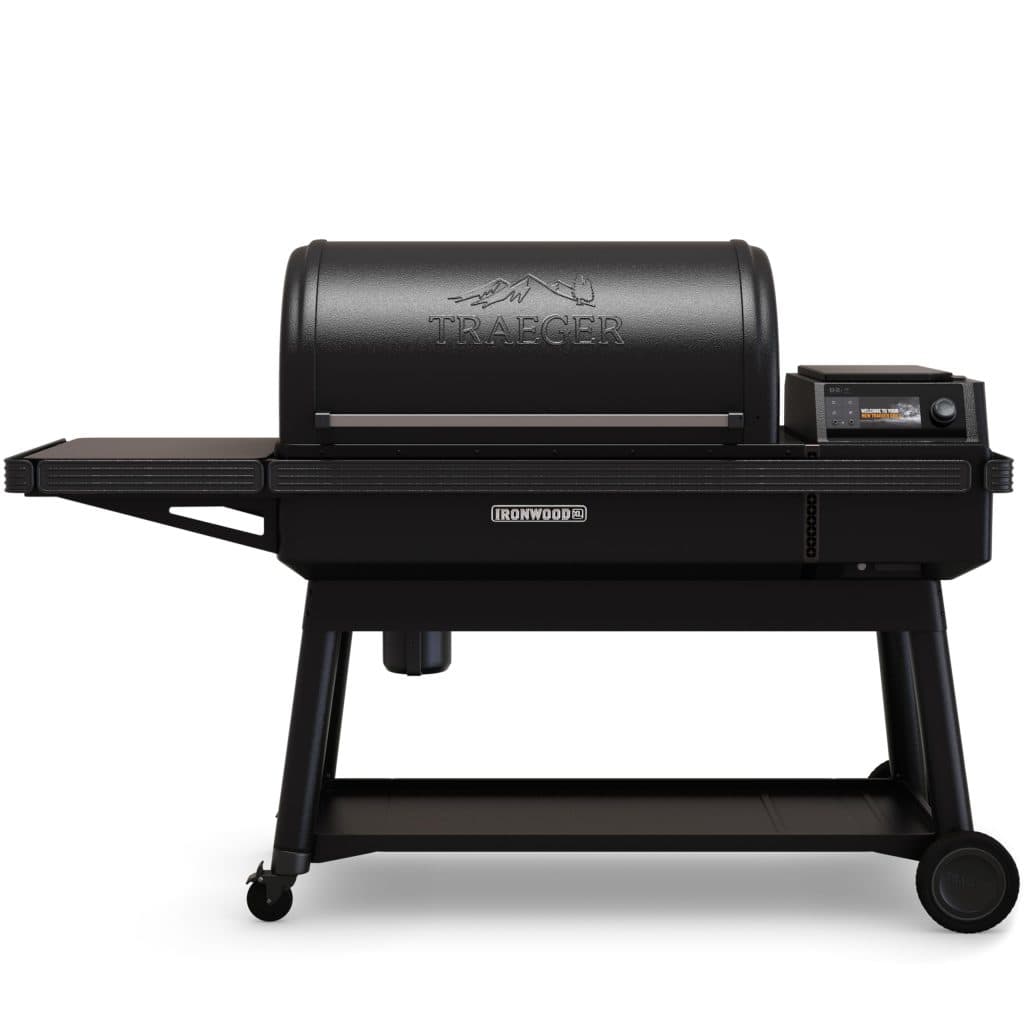
1. Traeger Ironwood XL — Best Pellet Grill for Serious BBQ

Massive 924 sq in pellet grill with WiFIRE app control, Smart Combustion for steady temps, Super Smoke flavor, 6-in-1 cooking and easy EZ-clean ash & grease keg.
$1,999.99 on Amazon
Price and availability are accurate as of 05/12/2026 12:40 am GMT and are subject to change.
The Traeger Ironwood XL is the definitive premium pellet grill. If you’re hosting competitions, smoking whole briskets weekly, or feeding crowds regularly, this is the one. At 924 square inches of cooking space, WiFIRE smart connectivity, and Traeger’s proprietary Super Smoke mode, it delivers capabilities that put it in a category of its own.
Key Specifications
| Cooking area | 924 sq in total (2 racks) |
| Temperature range | 165°F–500°F |
| Smart control | WiFIRE app (iOS/Android) |
| Signature feature | Super Smoke mode — max smoke flavor at any temp |
| Pellet hopper | 22 lb capacity |
| Cleanup | EZ-Clean grease & ash keg system |
| Construction | Double-wall steel insulated |
| Price | $2,199.99 |
Pros & Cons
- Pro: Super Smoke mode adds dramatically more wood-smoke flavor than competitors at the same temperature setting
- Pro: WiFIRE app gives precise temperature control and monitoring from anywhere — genuinely useful for low-and-slow cooks
- Pro: 924 sq in fits 10+ racks of ribs or 2 large briskets simultaneously
- Pro: EZ-Clean keg system makes post-cook cleanup significantly easier
- Pro: Double-wall insulation maintains consistent temperatures in cold weather
- Con: $2,199.99 is a serious investment — one of the most expensive consumer pellet grills
- Con: Max 500°F — can’t achieve the high-heat direct sear that a dedicated gas grill delivers
- Con: Large footprint requires substantial deck or patio space
2. Traeger Pro 575 — Best Entry Into Traeger’s Ecosystem
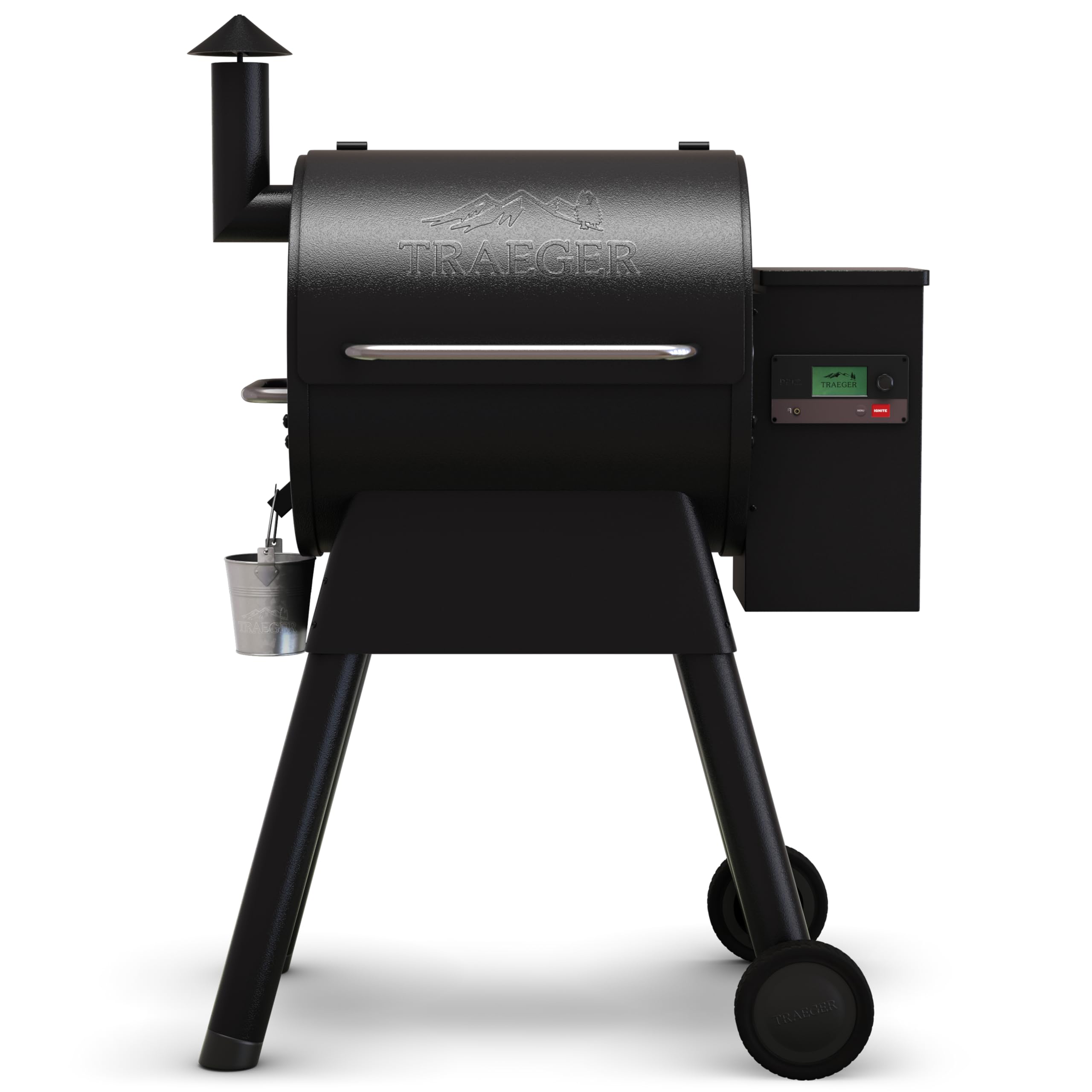
Get true wood-fired flavor with the Traeger Pro 575, smart WiFIRE control, fast heat, 575 sq in cooking, and consistent low-and-slow to hot-and-fast results.
$799.99 on Amazon
Price and availability are accurate as of 05/12/2026 12:09 am GMT and are subject to change.
The Traeger Pro 575 delivers the core Traeger experience — consistent wood-fired flavor, WiFIRE app control, and reliable pellet-fed combustion — at a fraction of the Ironwood XL price. With 575 sq in of cooking space, it handles family cookouts comfortably without the premium cost of the flagship lineup.
3. Weber Searwood XL 600 — Best for High-Heat Searing
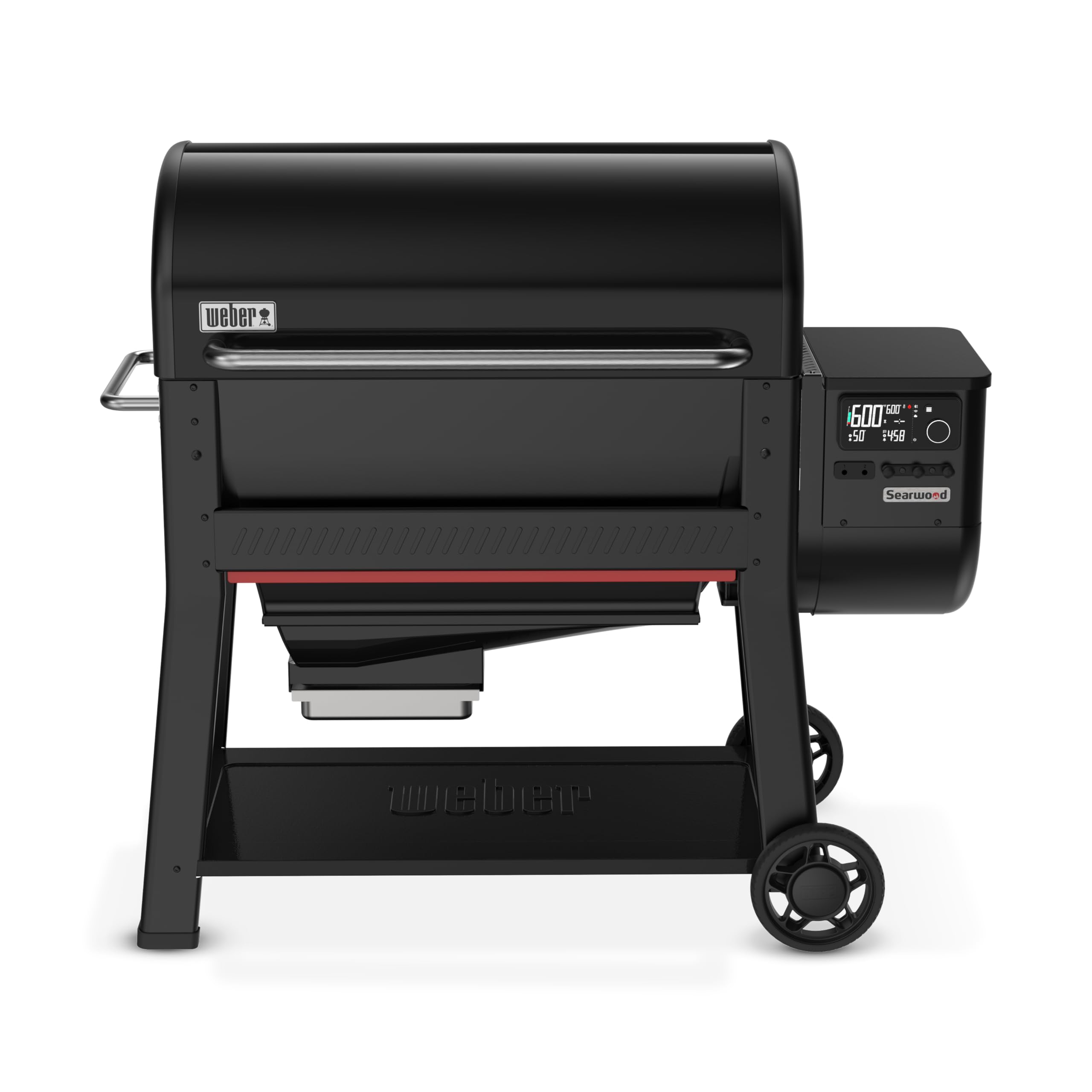
Sear, smoke, and roast up to 600°F—heats in 15 min, Wi‑Fi control via Weber Connect, full sear zone, big capacity and easy cleanup for backyard feasts.
$1,299.00 on Amazon
Price and availability are accurate as of 05/11/2026 01:44 am GMT and are subject to change.
Weber entered the pellet grill market late — but the Searwood XL shows why patience paid off. Weber’s engineers solved the pellet grill’s biggest limitation: the inability to truly sear. The Searwood XL reaches 600°F, significantly hotter than Traeger’s 500°F ceiling, creating genuine steakhouse-quality sear marks from a pellet grill. Combined with Weber Connect smart monitoring and a 15-minute heat-up time, this is the most versatile pellet grill Weber has ever built.
Key Specifications
| Cooking area | 26″ primary grate + upper rack |
| Temperature range | 200°F–600°F |
| Smart control | Weber Connect Wi-Fi + Bluetooth |
| Signature feature | Full sear zone — genuine high-heat direct grilling |
| Heat-up time | ~15 minutes to cooking temp |
| Construction | Porcelain-enameled cast iron grates, stainless accents |
| Warranty | 10-year limited (Weber’s industry-leading coverage) |
| Price | $1,299 |
Pros & Cons
- Pro: 600°F max temperature enables true high-heat searing — the best sear capability of any mainstream pellet grill
- Pro: 15-minute heat-up is among the fastest available — no 45-minute wait before cooking
- Pro: Weber’s 10-year warranty is industry-leading — twice as long as most competitors
- Pro: Weber Connect app is well-designed with guided recipes and step-by-step cooking assistance
- Pro: $900 cheaper than the Traeger Ironwood XL for comparable everyday performance
- Con: Weber is newer to pellet grills — less community knowledge, fewer user recipes vs. Traeger’s massive ecosystem
- Con: No equivalent to Traeger’s Super Smoke mode for maxing out smoke flavor intensity
- Con: Pellet hopper is smaller than Traeger’s 22 lb capacity
Where Pit Boss Fits In
Pit Boss isn’t represented by a specific product block here because their strongest advantage is price — entry-level Pit Boss grills (700D3, 820D3, etc.) start at $399–699, making them by far the most accessible way to start pellet grilling. What you give up:
- Temperature consistency: Pit Boss PID controllers have improved significantly but still show more variance than Traeger’s Smart Combustion or Weber’s precision control
- Build quality: Thinner steel gauge on entry-level models vs. Traeger and Weber’s heavier construction
- App/smart features: Pit Boss WiFi models exist but are less polished than Traeger’s WiFIRE or Weber Connect
- Smoke flavor: No equivalent to Traeger’s Super Smoke — standard smoke output at higher temps
Pit Boss is the right choice if: You want to experience pellet grilling before committing to a premium investment, you’re on a strict budget, or you simply want a capable smoker for occasional weekend use. The value-to-performance ratio at under $500 is genuinely impressive.
Traeger vs Weber vs Pit Boss: What to Consider
1. Smoke Flavor Intensity
This is where Traeger genuinely leads. Super Smoke mode on Ironwood models floods the cooking chamber with smoke at lower temperatures — the result is brisket and pork ribs with a smoke ring and bark that rivals competition BBQ pits. Weber’s Searwood produces good smoke flavor but can’t match Traeger’s smoke intensity at equivalent cook temperatures. Pit Boss delivers adequate smoke flavor for the price, but there’s a noticeable gap at the premium level.
2. Temperature Range & Searing
Weber wins this category decisively. The Searwood XL’s 600°F maximum is 100°F hotter than Traeger (500°F) and enables true high-heat searing — the one traditional weakness of pellet grills. If you want a grill that can also serve as your steakhouse-quality searing station, Weber is the only mainstream pellet grill that delivers it. Traeger and Pit Boss both max out at temperatures better suited for low-and-slow than quick-sear cooking.
3. Smart Features & App Control
Traeger’s WiFIRE app is the most mature ecosystem — thousands of guided recipes, remote temperature monitoring, pellet level alerts, and integration with meat probe readings. Weber Connect is excellent and growing quickly, with strong guided cooking assistance. Pit Boss’s WiFi app is functional but lags behind both in polish and recipe library depth. If app-connected cooking matters to you, Traeger has the most to offer.
4. Temperature Consistency
Consistent temperature is everything in BBQ — especially for brisket, pork shoulder, and other long cooks. Traeger’s Smart Combustion technology monitors combustion in real-time to maintain ±15°F variance across the cooking surface. Weber’s precision control is comparable. Pit Boss’s PID controllers have improved but typically show ±25–35°F variance on lower-end models. For overnight brisket cooks, Traeger and Weber are meaningfully more reliable.
5. Price & Value
The price ladder is steep: Pit Boss ($399–699) → Traeger Pro 575 ($799.99) → Weber Searwood XL ($1,299) → Traeger Ironwood XL ($2,199.99). Each step up buys you meaningful improvements, not just premium branding. The Weber Searwood XL at $1,299 is arguably the best overall value in the lineup — the 600°F searing capability and 10-year warranty justify the premium over Traeger’s Pro 575. The Traeger Ironwood XL is for serious BBQ enthusiasts who won’t compromise on smoke flavor or cooking capacity.
Side-by-Side Comparison
| Feature | Traeger Ironwood XL | Weber Searwood XL 600 | Pit Boss (entry) |
|---|---|---|---|
| Price | $2,199.99 | $1,299 | $399–699 |
| Cooking area | 924 sq in | 26″ + upper rack | 700+ sq in |
| Max temp | 500°F | 600°F | 500°F |
| Smoke mode | Super Smoke | Smoke Boost | Standard |
| Smart app | WiFIRE (best-in-class) | Weber Connect | Pit Boss app |
| Temp consistency | ±15°F (Smart Combustion) | ±15°F | ±25–35°F |
| Warranty | 3 years | 10 years | 5 years |
| Best for | Competition BBQ, serious smokers | Searing + smoking versatility | Budget entry into pellet grilling |
Frequently Asked Questions
1. Can you get a real smoke ring with a pellet grill?
Yes — especially with Traeger’s Super Smoke mode. A smoke ring (the pink layer under the bark) forms from nitric oxide reactions with myoglobin in the meat. Pellet grills with genuine wood combustion produce this. Super Smoke mode on Traeger significantly enhances smoke ring development by maximizing the smoke concentration at low temperatures where the reaction occurs.
2. Is Traeger better than Pit Boss?
Yes, in most objective categories — but at 3–4x the price. Traeger delivers better temperature consistency, more sophisticated app control, Super Smoke functionality, and more durable construction. Pit Boss is significantly better value for casual weekend BBQ. If you’re new to pellet grilling and aren’t sure you’ll use it regularly, start with Pit Boss. If you’re serious about BBQ, invest in Traeger.
3. What type of wood pellets should I use?
Match pellets to your protein: hickory and mesquite for beef brisket and ribs, apple and cherry for pork and poultry, pecan for a versatile medium-smoke option. Traeger sells brand-specific pellets, but third-party pellets from CookinPellets or Lumber Jack work equally well and are often cheaper. Use 100% wood pellets — avoid blended pellets that contain flavoring oils, which can affect your grill’s combustion system.
4. How often should I clean a pellet grill?
Vacuum the fire pot and ash accumulation every 5–10 cooks. Clean the grates after every cook with a grill brush while still warm. Do a deep clean (drip tray, heat deflector, inside walls) every 20–25 cooks or seasonally. Traeger’s EZ-Clean keg system makes ash and grease removal significantly easier than previous designs. Weber and Pit Boss require manual ash pots that need periodic emptying.
5. Do pellet grills work in cold weather?
Yes, but cold weather increases pellet consumption significantly and can affect temperature consistency. Traeger’s double-wall insulation on Ironwood models handles cold better than thin-walled competitors. All three brands recommend using an insulation blanket accessory for cooking below 40°F. Pit Boss’s thinner steel construction is most affected by cold — expect higher variance and 25–40% more pellet usage in winter conditions.
Traeger vs Weber vs Pit Boss: Which Should You Buy?
Choose the Traeger Ironwood XL if: Smoke flavor intensity is your top priority, you cook for crowds regularly, or you want the deepest recipe ecosystem and most sophisticated app control. This is the best pellet grill for someone who takes competition-style BBQ seriously at home.
Choose the Weber Searwood XL 600 if: You want a grill that genuinely does everything — smoke briskets low and slow AND sear steaks at 600°F. The 10-year warranty, fast heat-up, and Weber Connect app make this the best all-rounder for the serious home cook who doesn’t want to compromise on searing capability.
Choose Pit Boss if: You’re new to pellet grilling, budget is a genuine constraint, or you want to test the waters before committing to a premium investment. The core pellet-cooking experience at $399–699 is remarkable value, even if it lacks the advanced features of Traeger and Weber at the top end.