Oral-B vs Sonicare: Which Electric Toothbrush Wins in 2026?
GreatPickDeals
Oral-B vs Sonicare: Head-to-Head Electric Toothbrush Comparison
Two brands dominate the electric toothbrush market — Oral-B and Philips Sonicare. Both have legions of loyal fans, strong clinical backing, and premium flagship models. But they use completely different cleaning technologies, and that difference matters more than most buyers realize.
Oral-B uses a round rotating-oscillating head that mimics the motion of a professional dental cleaning. Sonicare uses high-frequency sonic vibrations that create fluid dynamics to clean between teeth. Neither is universally better — the right choice depends on your teeth, gum sensitivity, and habits.
In this 2026 comparison, we put the flagship Oral-B iO Series 10 against the Philips Sonicare DiamondClean Smart 9500 — two of the best electric toothbrushes money can buy. Here’s everything you need to make the right call.
Quick Picks
- Best overall / best for gum health: Oral-B iO Series 10 — rotating-oscillating motion proven superior for plaque removal in 30+ clinical studies
- Best for sensitive teeth / gentle brushing: Philips Sonicare DiamondClean Smart 9500 — gentler vibration motion, best for whitening and mild sensitivity
- Best budget pick: Oral-B Pro 1000 — all the clinical performance at a fraction of the flagship price
Product Reviews — Detailed Analysis
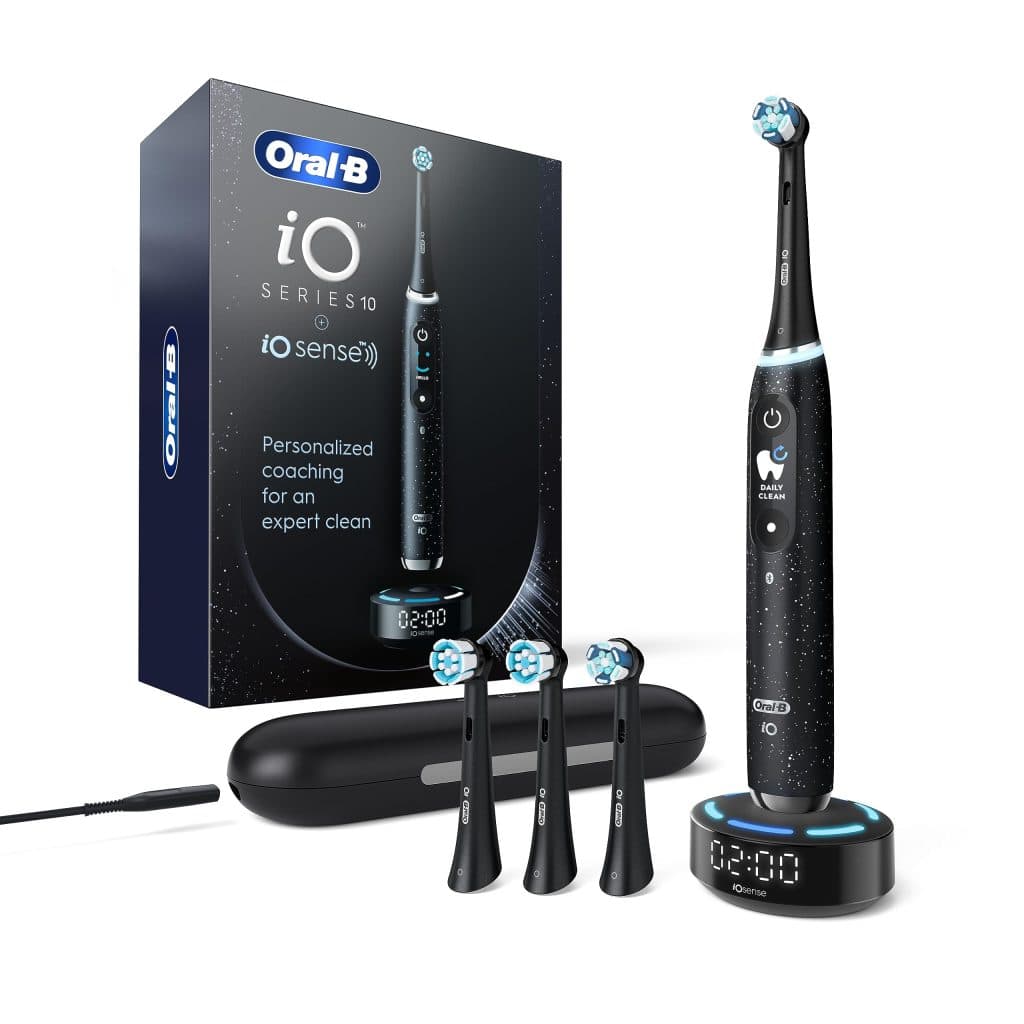
1. Oral-B iO Series 10 — Best for Clinical Plaque Removal

Oral-B iO 10: in-handle display, live coaching, pressure sensor and 7 modes for a gentler, pro-like clean. Syncs with app—see if it’s right for your smile.
$384.92 on Amazon
Price and availability are accurate as of 03/27/2026 06:05 pm GMT and are subject to change.
The Oral-B iO Series 10 is the brand’s flagship model — and it shows. The combination of rotating-oscillating motion, AI-powered real-time coaching via the companion app, and a built-in pressure sensor that glows red if you’re brushing too hard makes this the most comprehensive brushing experience available.
Key Specifications
| Cleaning motion | Rotating-oscillating (micro-vibrations) |
| Brush head shape | Round |
| Cleaning modes | 7 (Daily Clean, Sensitive, Whitening+, Intense, Super Sensitive, Tongue Cleaning, Gum Care) |
| Pressure sensor | Yes — LED color indicator + app alert |
| Battery life | Up to 2 weeks (magnetic charging) |
| App connectivity | Yes — AI zone tracking, real-time coaching |
| Timer | 2-minute with 30-second quadrant intervals |
| Price | $384.92 |
Pros & Cons
- Pro: Clinically proven superior plaque removal vs manual and sonic brushes in multiple peer-reviewed studies
- Pro: Round head fits snugly around each tooth for edge-to-edge coverage
- Pro: AI coaching via app gives real-time zone-by-zone feedback
- Pro: 7 cleaning modes covers virtually every brushing need
- Pro: Color-coded pressure sensor prevents gum damage
- Con: Premium price — significantly more expensive than the Sonicare 9500
- Con: Round head takes some adjustment if coming from a flat-head brush
- Con: Replacement heads are pricier than Sonicare equivalents
Best For
Anyone who wants maximum plaque removal efficiency, has been told by their dentist to improve their gum health, or wants the most comprehensive brushing data and coaching. If clinical performance is your priority, the iO Series 10 is the standard-setter.
2. Philips Sonicare DiamondClean Smart 9500 — Best for Sensitive Teeth & Whitening

Smart sonic toothbrush with real-time coaching, pressure alerts and brush-head pairing. Removes stains, improves gum health, plus travel USB and charging glass.
$266.99 on Amazon
Price and availability are accurate as of 03/29/2026 05:48 am GMT and are subject to change.
The Philips Sonicare DiamondClean Smart 9500 takes a different approach to clean teeth. At 31,000 brush strokes per minute, sonic vibrations create a hydrodynamic cleaning action that pushes fluid between teeth and along the gumline — reaching spaces that a brush head never physically touches.
Key Specifications
| Cleaning motion | Sonic vibration (31,000 strokes/min) |
| Brush head shape | Elongated (traditional shape) |
| Cleaning modes | 4 (Clean, White+, Gum Health, Deep Clean+) + 3 intensity levels |
| Pressure sensor | Yes — handle vibration + app alert |
| Battery life | Up to 3 weeks (inductive glass charger) |
| App connectivity | Yes — SenseIQ AI, brush head recognition chip |
| Timer | 2-minute with quadrant intervals |
| Price | $266.99 |
Pros & Cons
- Pro: Gentler on sensitive gums — sonic motion causes less mechanical abrasion than oscillating heads
- Pro: Longer battery life (3 weeks vs 2 weeks for Oral-B)
- Pro: Brush-head recognition chip automatically selects the right cleaning program
- Pro: $100+ cheaper than Oral-B iO Series 10 at launch pricing
- Pro: Traditional elongated head shape — familiar feel for most users
- Con: Fewer clinical studies comparing sonic to rotating-oscillating at the same plaque-removal level
- Con: 4 modes vs 7 on the Oral-B — less versatility for specific needs
- Con: The fluid dynamics benefit requires proper technique and adequate saliva flow
Best For
People with sensitive teeth or gums, those who prefer a traditional brush head shape, or anyone focused on whitening and stain removal. The Sonicare’s gentler action and fluid dynamics also make it an excellent choice for people with braces, implants, or veneers.
Oral-B vs Sonicare: What to Consider When Buying
1. Cleaning Technology — The Core Difference
This is the most important distinction. Oral-B uses a rotating-oscillating head that spins at 8,800 RPM with micro-vibrations — physically scrubbing each tooth surface. Sonicare uses linear sonic vibrations at 31,000 strokes per minute, which generates acoustic fluid dynamics that clean beyond where the bristles reach.
The research overwhelmingly favors rotating-oscillating for pure plaque removal. A Cochrane systematic review (the gold standard in medical evidence) found that rotating-oscillating brushes remove 11% more plaque and 6% more gingivitis compared to manual brushes — outperforming sonic in head-to-head studies. But “more effective” doesn’t always mean “better for you” — if the Oral-B head causes you to brush harder and damage your gums, the Sonicare’s gentler action wins in practice.
2. Gum Sensitivity
If you have receding gums, thin enamel, or sensitivity, Sonicare is usually the better choice. The sonic vibration creates less localized abrasive pressure than the spinning Oral-B head. That said, both models include pressure sensors — so if you use the Oral-B correctly, this gap narrows significantly.
3. App Features & Coaching
Both brushes have companion apps with zone-by-zone tracking and AI coaching. The Oral-B app gives real-time coverage maps and rates your brushing session with a score. The Sonicare app’s SenseIQ adjusts intensity based on how you brush and the brush head installed. Oral-B’s AI coaching is slightly more granular — better for people who want data-driven improvement. Sonicare’s automatic adjustment is better for people who want it to just work.
4. Replacement Head Costs
Replacement heads are a recurring cost often overlooked at purchase. Oral-B iO heads run about $10–15 per head, with 4-packs around $35–45. Sonicare heads are comparable at $10–14 each, often cheaper in bulk. Both should be replaced every 3 months per dental guidance. Budget $45–60/year for either brush.
5. Battery Life & Charging
The Sonicare 9500 wins on battery — up to 3 weeks vs 2 weeks for the Oral-B iO Series 10. Both charge via magnetic/inductive bases. The Sonicare’s included charging glass is elegant and travel-friendly. The Oral-B iO Series 10 includes a travel case with USB charging, which is arguably more practical for frequent travelers.
6. Price & Value
The Sonicare DiamondClean Smart 9500 at $266.99 is a genuinely strong value at the flagship level. The Oral-B iO Series 10 at $384.92 is significantly more expensive — but backs that up with stronger clinical evidence and more cleaning modes. If budget is a real concern, the mid-range Oral-B iO Series 5 or 7 delivers most of the performance at ~$100–180.
Side-by-Side Comparison Table
| Feature | Oral-B iO Series 10 | Sonicare DiamondClean 9500 |
|---|---|---|
| Motion type | Rotating-oscillating | Sonic vibration |
| Strokes/min | ~8,800 RPM + vibrations | 31,000 strokes/min |
| Cleaning modes | 7 | 4 + 3 intensity levels |
| Pressure sensor | LED + app | Handle vibration + app |
| App coaching | AI zone tracking | SenseIQ auto-adjust |
| Battery life | Up to 2 weeks | Up to 3 weeks |
| Head shape | Round | Elongated |
| Best for | Max plaque removal, gum health | Sensitivity, whitening |
| Price | $384.92 | $266.99 |
| Clinical evidence | Very strong (Cochrane-reviewed) | Strong |
Frequently Asked Questions
1. Is Oral-B or Sonicare better recommended by dentists?
Both brands are widely recommended by dentists. Oral-B’s rotating-oscillating technology has more peer-reviewed clinical evidence supporting superior plaque and gingivitis reduction. However, many dentists recommend Sonicare for patients with sensitive gums or implants, where the gentler sonic action is preferred.
2. Can you use Oral-B heads on a Sonicare and vice versa?
No. Oral-B and Sonicare use completely different handle-to-head connection systems. They are not interchangeable. Oral-B uses a two-pin connection while Sonicare uses a keyed shaft. Always buy replacement heads for your specific brand and handle model.
3. Is the iO Series 10 worth the extra cost over the Series 5 or 7?
For most people, no. The iO Series 7 (~$180) provides the round head, pressure sensor, and multiple modes that matter most for everyday brushing. The Series 10 adds the in-handle display, more app features, and a premium finish — these are nice-to-haves, not need-to-haves. If you want the best, get the 10. If you want great value, the Series 7 is the sweet spot.
4. Which is better for braces or implants?
Sonicare is generally the preferred choice for braces, implants, and veneers. The sonic vibration is gentler on dental work and hardware. Oral-B’s spinning head can be harder to maneuver around brackets, though specialized iO orthodontic heads are available. Ask your orthodontist for a specific recommendation based on your situation.
5. Do these brushes really make a difference compared to a manual toothbrush?
Yes — the evidence is clear. Multiple meta-analyses show electric toothbrushes (both oscillating and sonic) remove significantly more plaque and reduce gingivitis better than manual brushing over time. The built-in 2-minute timer alone helps most people brush longer than they would manually. For people prone to over-brushing, the pressure sensor prevents gum damage. Electric brushes are a worthwhile investment for anyone who wants to maximize their oral health.
Oral-B vs Sonicare: Which Should You Buy?
Choose the Oral-B iO Series 10 if: You want maximum clinical plaque removal, your dentist has flagged gum health concerns, or you want the most comprehensive brushing coaching with zone-by-zone AI feedback. The round head delivers unmatched coverage around each tooth — that’s why dental hygienists have used similar technology professionally for decades.
Choose the Sonicare DiamondClean Smart 9500 if: You have sensitive gums or teeth, prefer a traditional elongated brush head, prioritize whitening, or want a premium experience at a lower flagship price. The automatic SenseIQ adjustment also makes it a better “set it and forget it” option for less tech-forward users.
Both are exceptional brushes that will dramatically outperform a manual toothbrush. For most people, either choice will be a significant upgrade — but the Oral-B has the stronger clinical track record, while the Sonicare wins on gentleness and ease. Pick based on your specific dental needs, not brand loyalty.
Related Content
- Best Electric Toothbrushes 2025: Top Picks & Save More
- Oral Care Guide: Essential Tips For Healthy Teeth
- Best Facial Cleansing Brushes 2025: Top Picks & Reviews
- Self Care Routine Guide: Build Your Daily Practice Today
- Best Hair Dryers 2025: Top Picks for Fast, Healthy Hair
- Skincare Routine Guide: Build Flawless Skin Today